Last updated November 23, 2026
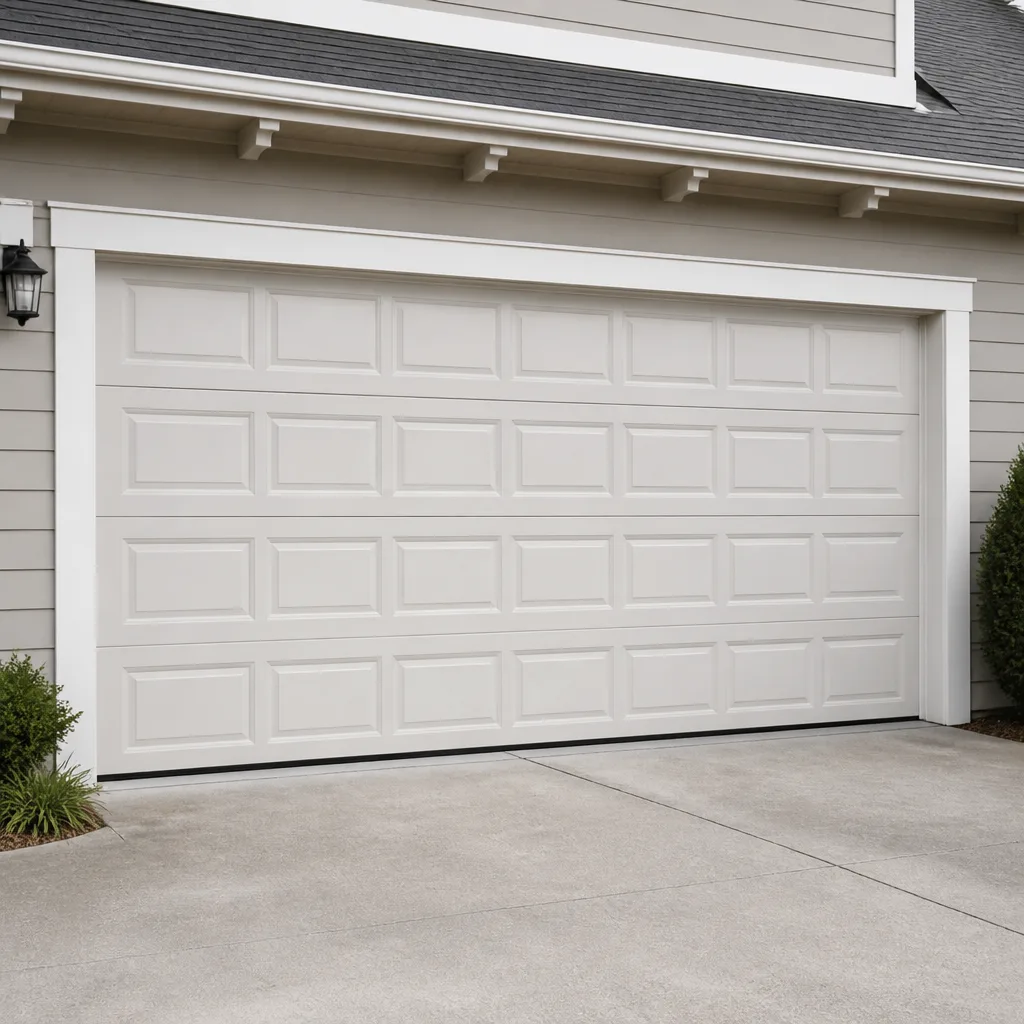 Raised-panel steel
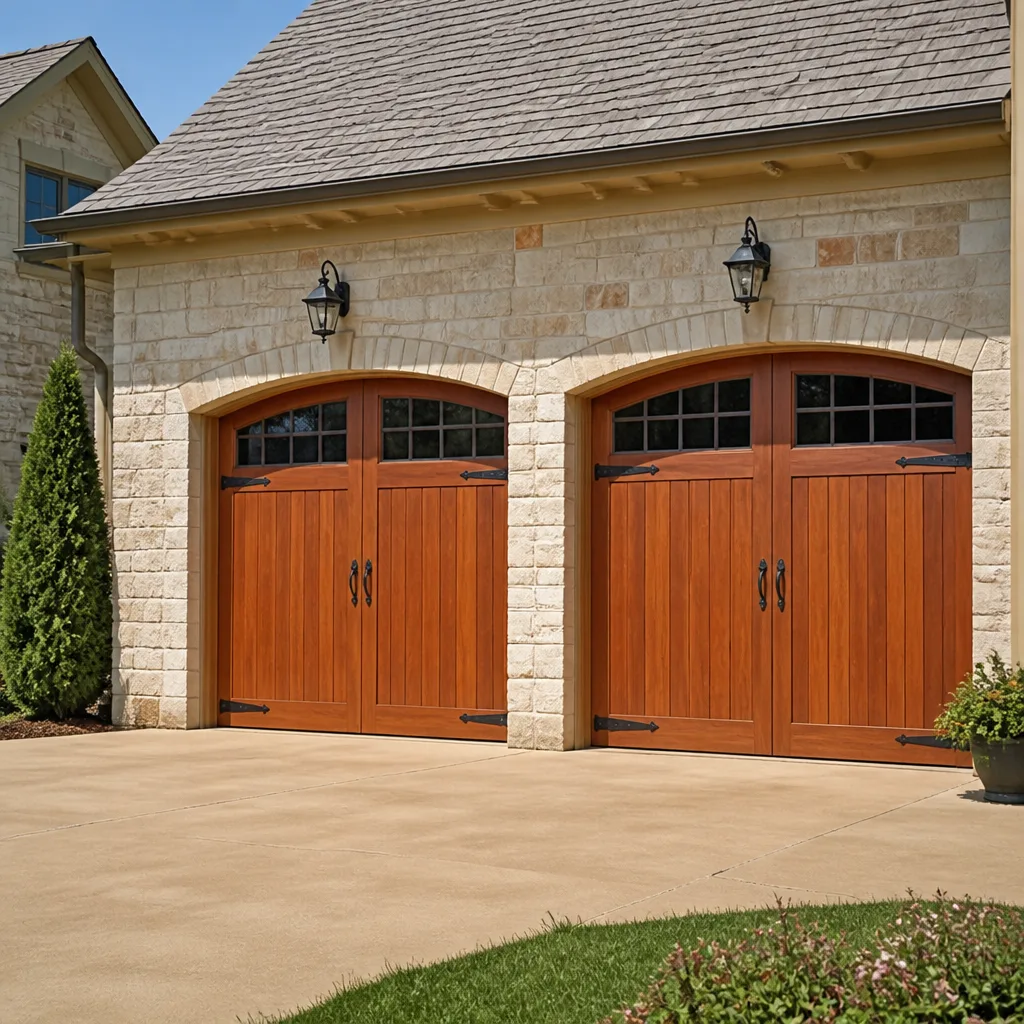 Carriage house
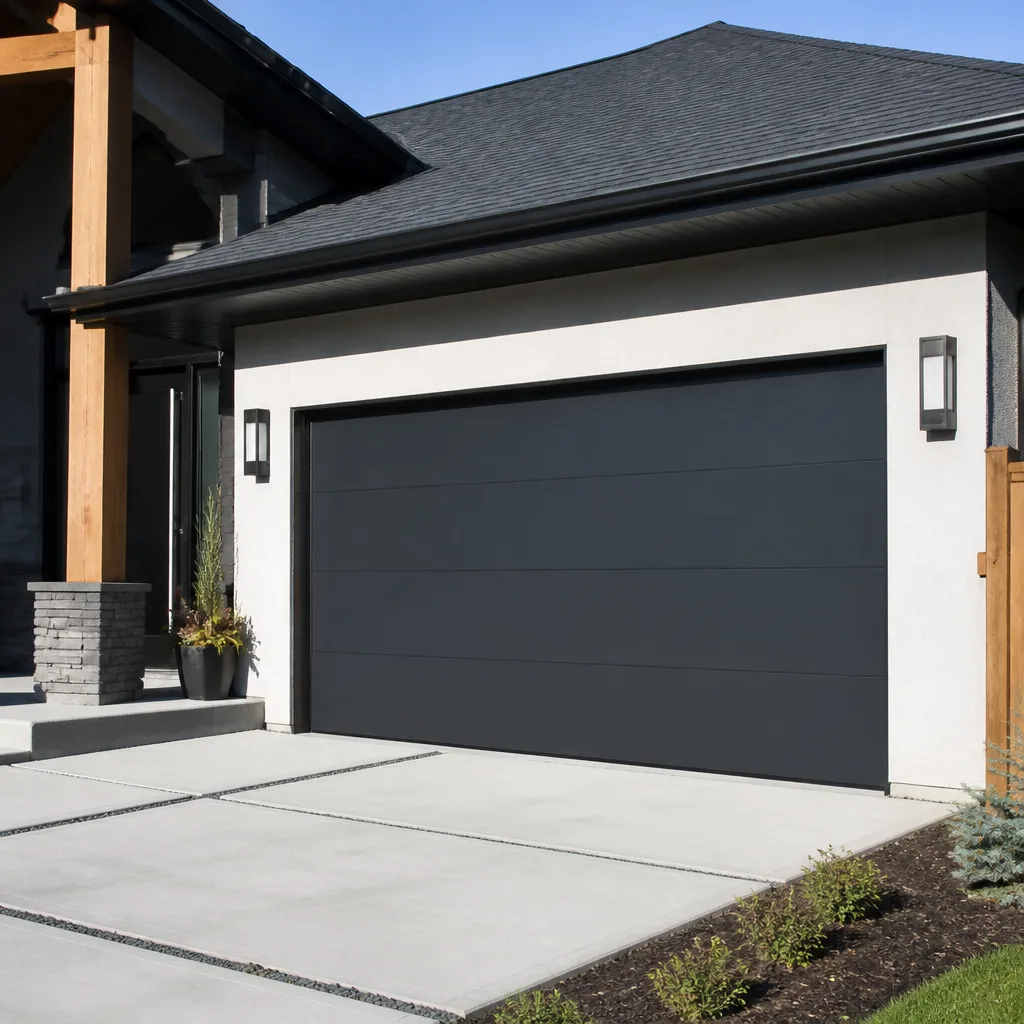 Modern flush
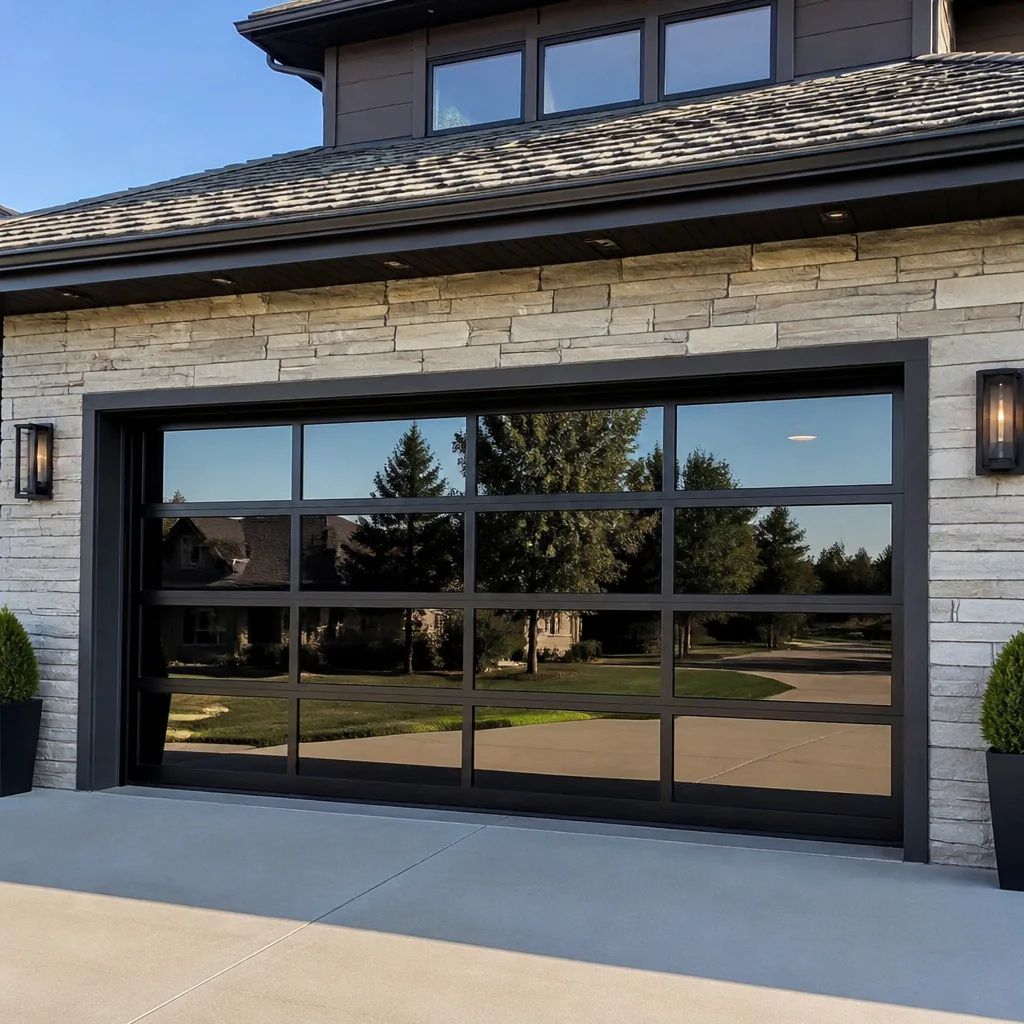 Full-view glass
 LiftMaster openers
 Chamberlain openers
Full 25-point door and opener safety check with every visit - springs, cables, rollers, tracks, and your LiftMaster or Chamberlain opener included
You get a price before we start. It does not change when the pro arrives.
Get your free estimateGarage Door Repair Maintenance Checklist for Tacoma Homeowners
Most garage door maintenance advice gets the order wrong. It tells you to wipe down the panels, tighten a few bolts, and spray some lubricant, then mentions spring lubrication as an afterthought near the bottom. That’s backwards for a Tacoma door. The parts that fail loudest and cost most – the torsion spring, the cables, the bottom seal – are the ones buried under cosmetic chores. Skip the panel-wiping entirely and you’ll lose nothing. Skip the spring, and a door that would have run another few seasons can snap in a January cold snap. This guide ranks the work by consequence instead of convenience, sorts it around Tacoma’s wet season, and shows you the checks you can run in under two minutes with no tools. It also tells you exactly where the safety line sits.
Quick Answer
A useful garage door maintenance checklist for a Tacoma home prioritizes spring tension, cable condition, bottom seal integrity, and balance first – in that order – then lubrication, hardware, and opener force settings. The most important timing is fall, not spring: get the door prepped before the November-through-March wet season starts, because water intrusion and cold temperature swings cause most of the wear a Tacoma door actually sees. Anything involving springs or cables is a professional job, full stop.
Styles & brands we work with
- Raised-panel steel
- Carriage house
- Modern flush
- Full-view glass
- LiftMaster openers
- Chamberlain openers
Table of Contents
- Why the Order of Your Checklist Matters More Than the List
- Tacoma’s Wet Season: How to Time Your Prep
- The High-Consequence Checks (Do These First)
- The 60-Second Balance Test and Force Test (No Tools)
- The Right Lubricants for Tacoma’s Temperature Range
- Hardware, Hinges, and Rollers: The Monthly Tune-Up
- Opener and Safety Reverse Checks
- Where the Checklist Ends and a Professional Starts
Why the Order of Your Checklist Matters More Than the List
Any list of garage door maintenance tasks is roughly the same across the internet: clean, lubricate, tighten, test. The content isn’t the problem. The sequencing is. When the single most consequential item – lubricating the torsion spring – lands at number nine on a printed checklist, most homeowners never reach it. They start with the visible chores, run out of patience, and put the paper down. The spring then goes dry for another year, coils under tension, and eventually fails.
We build our maintenance guidance by consequence. A dry, unlubricated torsion spring is a several-hundred-dollar repair. A frayed cable is worse: it can whip free under tension and injure someone. A torn bottom seal lets rain and cold air into the garage all winter, which accelerates wear across the whole system. Those three items should sit at the very top of your list, ahead of anything cosmetic. Wiping a panel with a rag achieves nothing functionally. Checking that bottom seal is the difference between a dry garage and a wet one.
Here’s the sequence we recommend in Tacoma, from highest consequence to lowest:
- Bottom seal integrity – the first line of defense against wet-season water intrusion.
- Spring lubrication – dry springs fatigue faster and can fail under load.
- Cable inspection – look only, never touch a cable under tension.
- Balance and force test – tells you whether the whole system is under strain.
- Hardware tighten and roller inspection – the routine monthly pass.
- Opener and safety reverse test – confirm the safety systems work.
- Track alignment and weatherstripping – the seasonal detail work.
The rest of this guide unpacks each one, in that order, with Tacoma specifics.
Tacoma’s Wet Season: How to Time Your Prep
Most national garage door maintenance calendars peak in spring. In Tacoma, that’s the wrong season. Our wet season runs November through March, and that’s the stretch that punishes a door. Rain, long damp spells, and the cold snaps that hit during those months put the most stress on seals, springs, and hardware. If you do your real maintenance in spring, you’re prepping for the easiest half of the year and entering the hard half with a door that’s been quietly deteriorating all summer.
Fall prep is where the leverage is. The two or three weeks before the November rains settle in are the best window to:
- Replace any bottom seal that has hardened, cracked, or pulled away from the door.
- Apply a cold-rated lubricant to springs, hinges, and rollers so it’s already in place before temperatures drop.
- Clear the tracks of grit and check that the door seals evenly on both sides.
- Confirm the door drains and doesn’t trap water at the threshold.
Spring prep still matters, but as a lighter touch. Once the wet season eases, you’re checking for winter damage – rusted hardware, swollen seals, a door that runs stiffer than it did in October. The work in spring is inspection and cleanup. The work in fall is the stuff that prevents failures.
If you notice your door struggling as the rains begin, that’s the moment to schedule a garage door repair rather than waiting it out. Small wear caught in fall costs far less than a snapped part in February.
What Changes With the Weather
Temperature swings compress and expand metal, and springs under tension are especially vulnerable. A torsion spring that’s a little dry going into a cold spell is far more likely to break than the same spring mid-summer. A bottom seal that seals fine in August can harden and lose contact when the temperature drops. If you only do one maintenance session a year in Tacoma, make it the fall one, and treat the spring session as a bonus.
The High-Consequence Checks (Do These First)
These three checks take ten minutes total and catch nearly everything that tends to go wrong in a Tacoma garage. Do them before anything else on your checklist, and never rush them.
1. Bottom Seal Integrity
Open the door and inspect the rubber or vinyl strip along the bottom edge. Look for cracks, brittleness, sections pulling out of the retainer, or visible daylight when the door is closed. Run your finger along it: if it feels hard, it’s past its useful life. A failing bottom seal lets rain, cold air, and pests in, and it forces the door to work harder to close and seal properly. Replacing a bottom seal is one of the few maintenance items many homeowners can manage themselves – if the retainer is intact and straightforward.
2. Spring Lubrication
Identify the spring set above the door – either one torsion spring on a steel shaft, or two extension springs on either side. For torsion springs, apply a purpose-made garage door lubricant along the coil in a light, even coat. Do not touch the spring beyond applying lubricant; the spring is under extreme tension and should never be adjusted or disassembled by anyone but a trained technician. If you apply lubricant and see the spring is rusted through, cracked, or visibly deformed, stop and call a professional.
3. Cable Inspection
Cables run alongside the springs under serious tension. Look – do not touch. Frayed strands, kinks, or rust indicate a cable that’s close to failing. A frayed cable should never be handled or adjusted by a homeowner. Catching it visually and calling a professional is the right next step. Cable and spring work is expert territory, and spring repair in particular has no safe DIY shortcut.
The 60-Second Balance Test and Force Test (No Tools)
Two quick tests tell you whether your door and opener are working harder than they should. You can run both in about a minute, and both are no-tools checks. Do them in fall and spring, or any time the door feels sluggish.
Balance Test
- Disconnect the opener with the manual release (typically a red cord).
- Lift the door by hand to about halfway, roughly waist height.
- Let go. A well-balanced door should stay in place, maybe with a slight drift.
- If it drops or slides hard in either direction, the spring tension is off and needs a professional adjustment.
A door that won’t hold position is a spring-balanced door that’s out of tune. That’s a technician’s job. Do not try to adjust spring tension yourself.
Force and Safety Reverse Test
- Reconnect the opener and run the door up.
- Place a solid object – a 2×4 or a full roll of paper towels – flat on the floor in the door’s path.
- Close the door with the opener. It should reverse within a couple of inches of contact with the object.
- If the door doesn’t reverse, the safety system needs adjusting before the door is used again.
The safety reverse is a life-safety feature, not a convenience. If yours fails this test, treat it as urgent. For the underlying opener mechanics, a technician from our garage door opener repair team can diagnose and correct force settings.
The Right Lubricants for Tacoma’s Temperature Range
Not every garage door lubricant sold nationally is right for a Tacoma garage. Many products are formulated for dry climates or high heat, and they gum up in cold, wet conditions. In our climate, a lubricant should stay effective from a mild summer down to a cold January night and shouldn’t thicken to a sticky paste when the humidity climbs.
What we recommend for Tacoma:
- Use a purpose-made garage door lubricant rated for cold and wet conditions – typically a white lithium or specialist door lubricant. Check the label’s low-temperature spec.
- Avoid WD-40 as a long-term lubricant. It displaces moisture well but attracts dust and doesn’t hold up as wear protection. It’s fine for a quick unsticking, not a schedule.
- Avoid heavy grease on springs and hinges. Thick grease tends to harden in cold weather and trap grit, which accelerates wear.
- Use silicone spray on tracks and seals – light, non-sticky, and effective in wet conditions.
The general rules: lubricate springs lightly at least once in fall and once in spring, hinges and rollers monthly if you want a tight-running door, and reapply after any heavy cold spell. If you’re not sure what’s on your door now, a professional can advise at the same time they service it. A well-lubricated door runs quietly and lasts longer. A neglected one tells you early with noise.
What to Avoid on Your Hardware
The wrong lubricant is often worse than no lubricant. Thick, tacky products attract the grit that gets into a garage over time and can turn a free-running roller into a seized one. Stay with light, purpose-made products, and don’t over-apply. A little, applied regularly, works better than a lot, applied once a year.
Hardware, Hinges, and Rollers: The Monthly Tune-Up
Once the high-consequence checks are done, the monthly pass keeps the door running smoothly. It’s low effort and catches small wear before it turns into a breakdown.
- Inspect hinges. Look for cracks, wear, or play at the joints. A worn hinge can cause the door to misalign.
- Check rollers. Steel rollers wear and develop flat spots. Nylon rollers hold up better in damp climates. Replace any that rattle or wobble.
- Tighten bolts and brackets. Use the right tools and don’t overtighten. Slight play is normal; excessive wobble is not.
- Clean tracks. Use a damp rag, not a hose, and don’t spray lubricant directly into the track – grit is the enemy here. A light silicone wipe on the track surface is enough.
- Check the paint or finish. Not cosmetic only: bare metal rusts in our wet season. Touch up any bare spots.
If a hinge or bracket looks structurally damaged rather than just loose, don’t force it. The door’s mechanical integrity depends on those parts, and a compromised hinge should be replaced by a professional who can confirm the rest of the assembly is intact.
Weatherstripping and Seals
Beyond the bottom seal, the vertical weatherstripping along the sides and top of the door frame matters in Tacoma. If it’s torn, missing, or gapped, wind-driven rain gets past the door and wear accelerates. Check it along with the bottom seal each season. This is a category where the little details add up.
Opener and Safety Reverse Checks
Your opener is a motor and a control board, and it’s doing a lot of work quietly. A monthly check keeps it dependable and catches problems before the door won’t open at all. Modern openers from LiftMaster and Chamberlain with integrated smartphone app compatibility give you one extra tool: you can see if the door has been opening and closing unexpectedly, or if it’s reporting errors. Older or legacy systems like a Craftsman or a Raynor opener need the same manual checks, just without the app.
Monthly opener checks:
- Run the safety reverse test with a solid object under the door (see the 60-second section above).
- Check the wall controls and remotes for consistent response. A remote that only works close to the door suggests antenna or battery issues.
- Listen to the opener during a cycle. Grinding, straining, or a delayed start point to a mechanical issue.
- Confirm the manual release works and re-engages cleanly.
- Look for symptom codes. If your opener’s indicator light is flashing a pattern, that’s a diagnosis cue worth noting for a technician.
If your opener is more than a decade old, intermittent behavior or repeated failures are a signal to evaluate repair versus replacement. We can talk through both paths – the opener itself or a full door and opener replacement that we can handle as a single garage door installation. Doing the monthly checks keeps you ahead of the moment a worn opener fails on a wet Tuesday morning.
Where the Checklist Ends and a Professional Starts
This is the most important section in the guide. Most printed maintenance checklists don’t tell you where your reach ends, so homeowners cross the line without realizing it. Here’s the honest boundary:
- Springs and cables: Any adjustment, replacement, or de-tensioning is a professional job. A torsion spring stores enormous energy and can cause serious injury if released incorrectly. Do not attempt it.
- Opener wiring and electrical connections: If your opener needs repair involving mains wiring or the circuit board, it belongs with a trained technician.
- Track realignment and panel replacement: A door that has come off track or been physically damaged should be professionally assessed and repaired. Attempting to force it back into place risks further damage and injury.
- Anything requiring the door to come off its hardware: Replacement of a spring, cable, or the door itself is professional work.
There’s a practical reason beyond safety: in most cases, attempting these repairs yourself voids the door and opener manufacturer’s warranty. You also risk an injury that costs far more than the repair. Spring repair done safely is a real skill, and the line is there for good reason.
Our technicians have up to 9 years of experience across these exact systems and a factory familiarity with every major brand – which means faster diagnosis and the right part for your system, whether it’s a LiftMaster with app control, a Wayne Dalton door, an older Craftsman opener, or a mixed-brand setup that a generalist would turn away. Garage doors are all we do. If your maintenance check turns up something in the professional zone, that’s the moment for a call, not a YouTube tutorial.
Common Mistakes to Avoid
- Doing the cosmetic jobs first. When the panel-wiping and cosmetic dusting jump the queue, spring lubrication never gets done. Start with the spring and the seal.
- Using the wrong lubricant. A high-heat or dry-climate product from a national brand can gum up in Tacoma’s damp cold. Check the low-temperature rating and use a purpose-made door lubricant.
- Skipping the fall prep because “it’s just rain.” Wet season is the hardest stretch for a Tacoma door. Delaying prep until spring means you’ve weathered the worst months unprotected.
- Touching a cable or spring under tension. Cables and springs are under extreme load. Never adjust, tighten, or attempt to release either one.
- Ignoring a frayed cable because the door still opens. A cable that’s fraying can fail with almost no warning. Visual inspection monthly, and call if you see strand separation.
- Assuming the safety reverse will always work. It can drift with time and temperature. Test it monthly with a solid object on the floor.
- Forcing a door that’s come off-track. If the door jumps track, stop using the opener and call. Forcing it causes panel damage and can release the door unpredictably.
See the difference
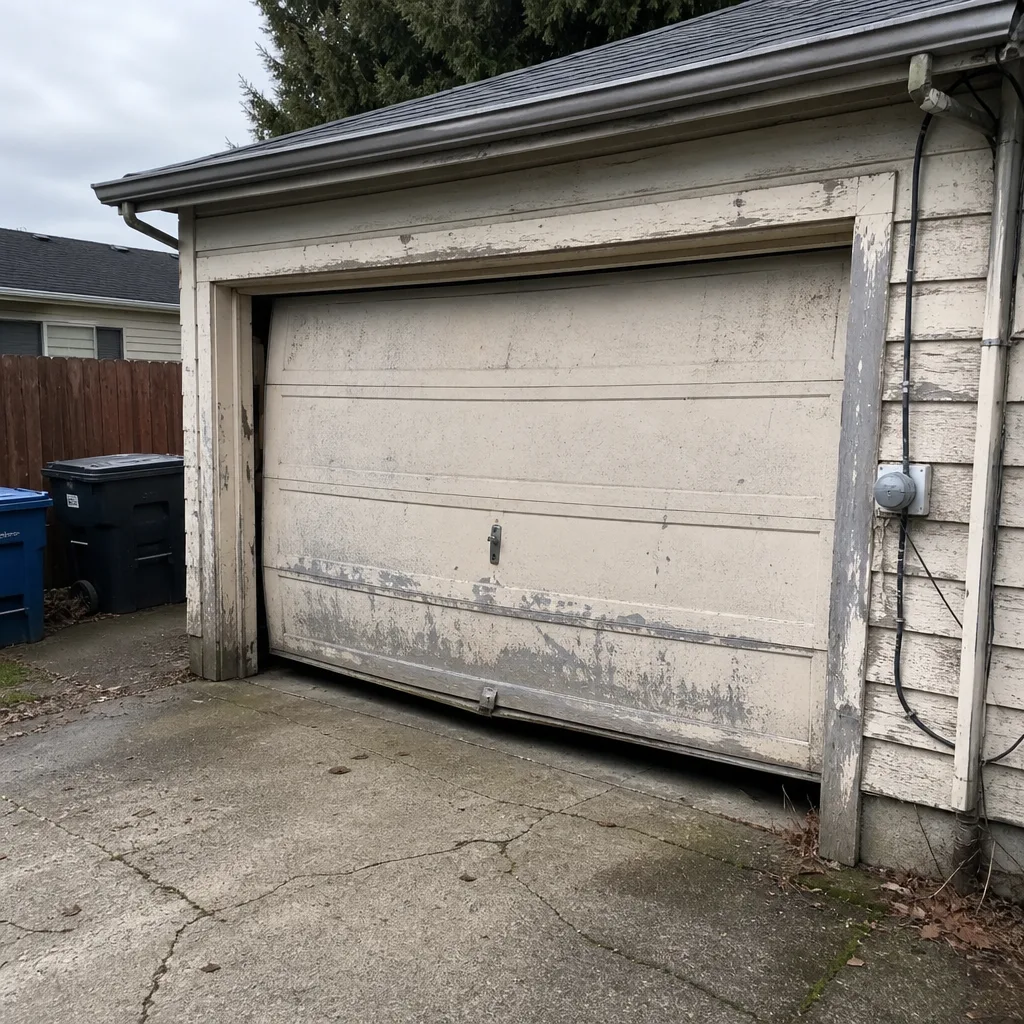 Before
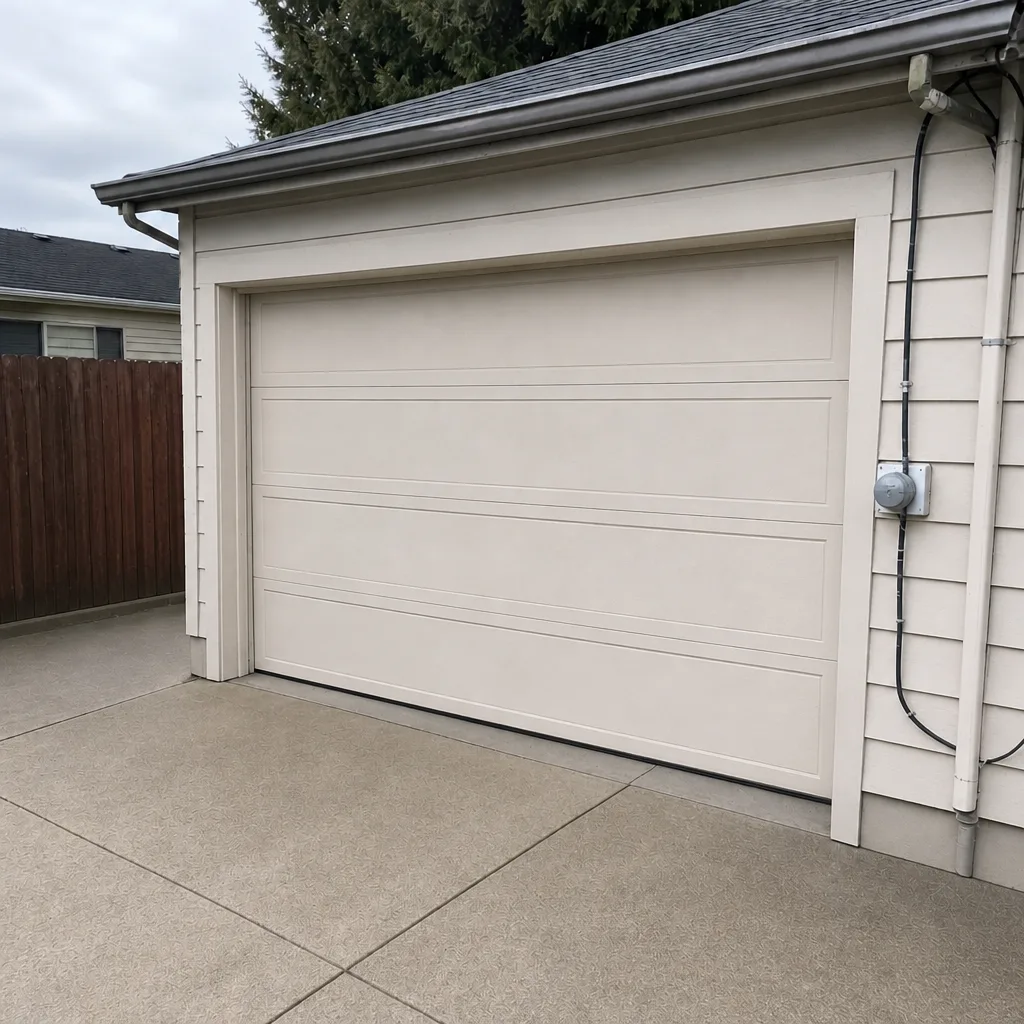 After
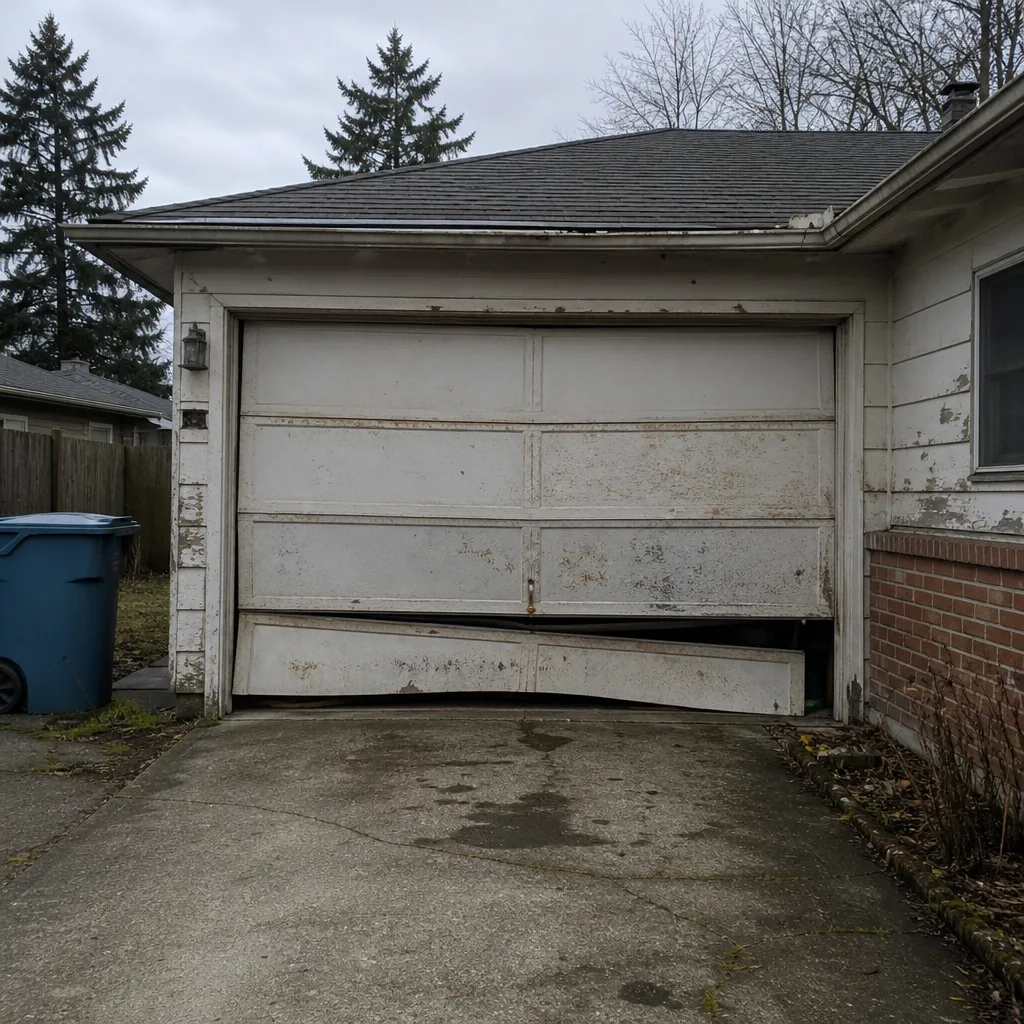 Before
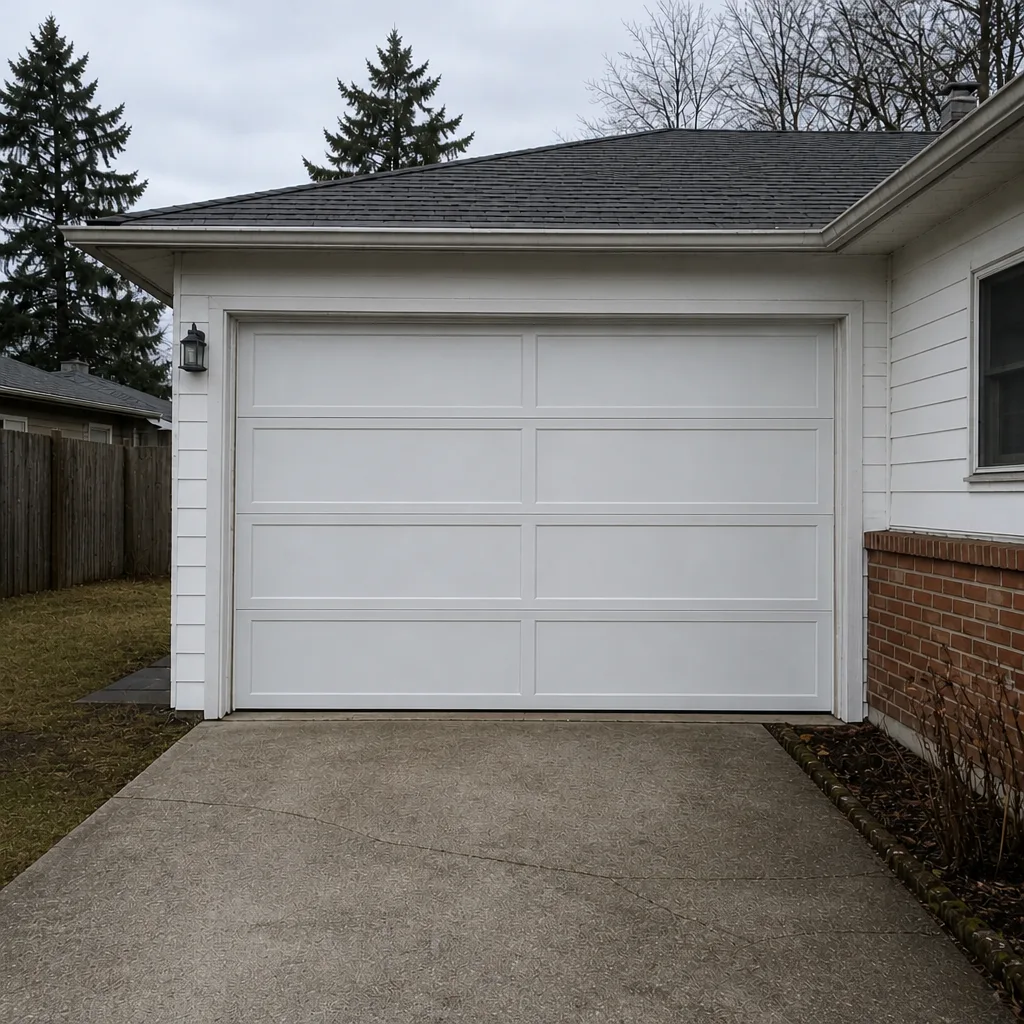 After
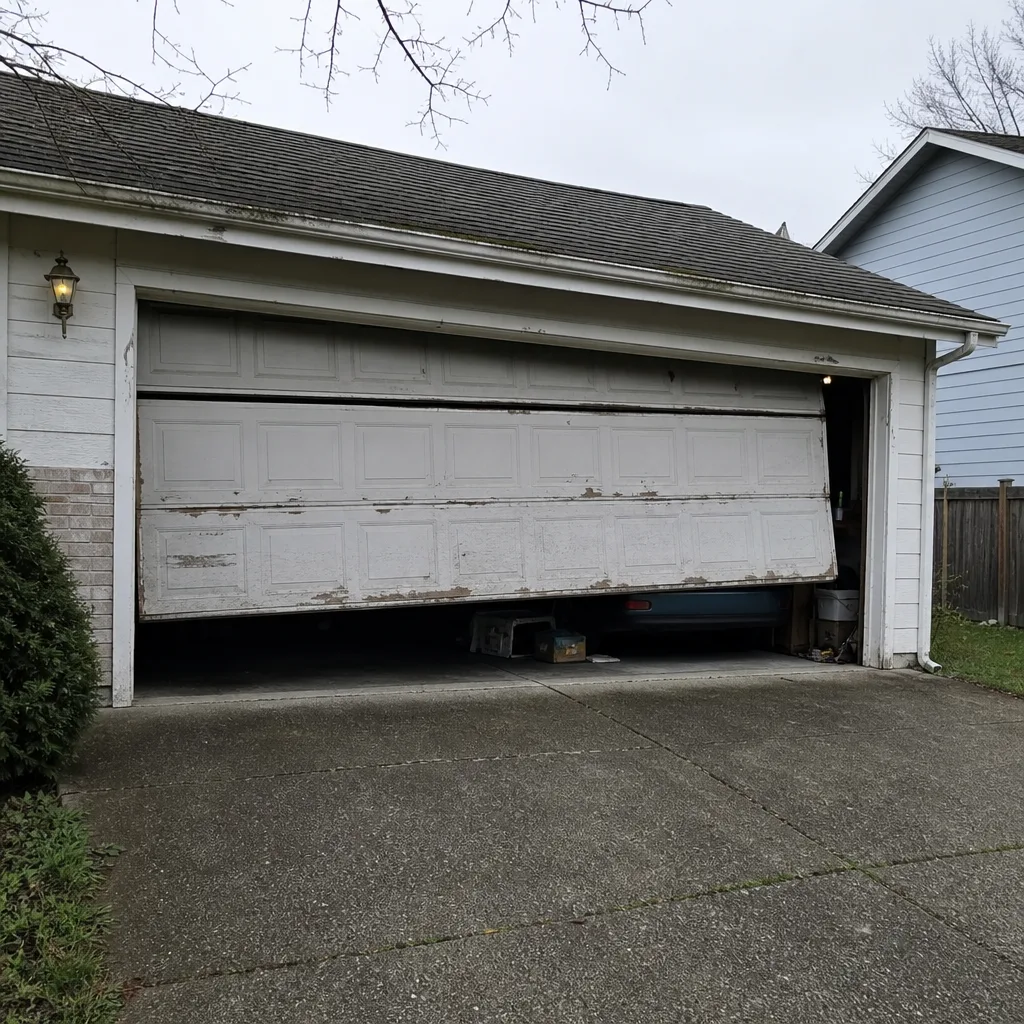 Before
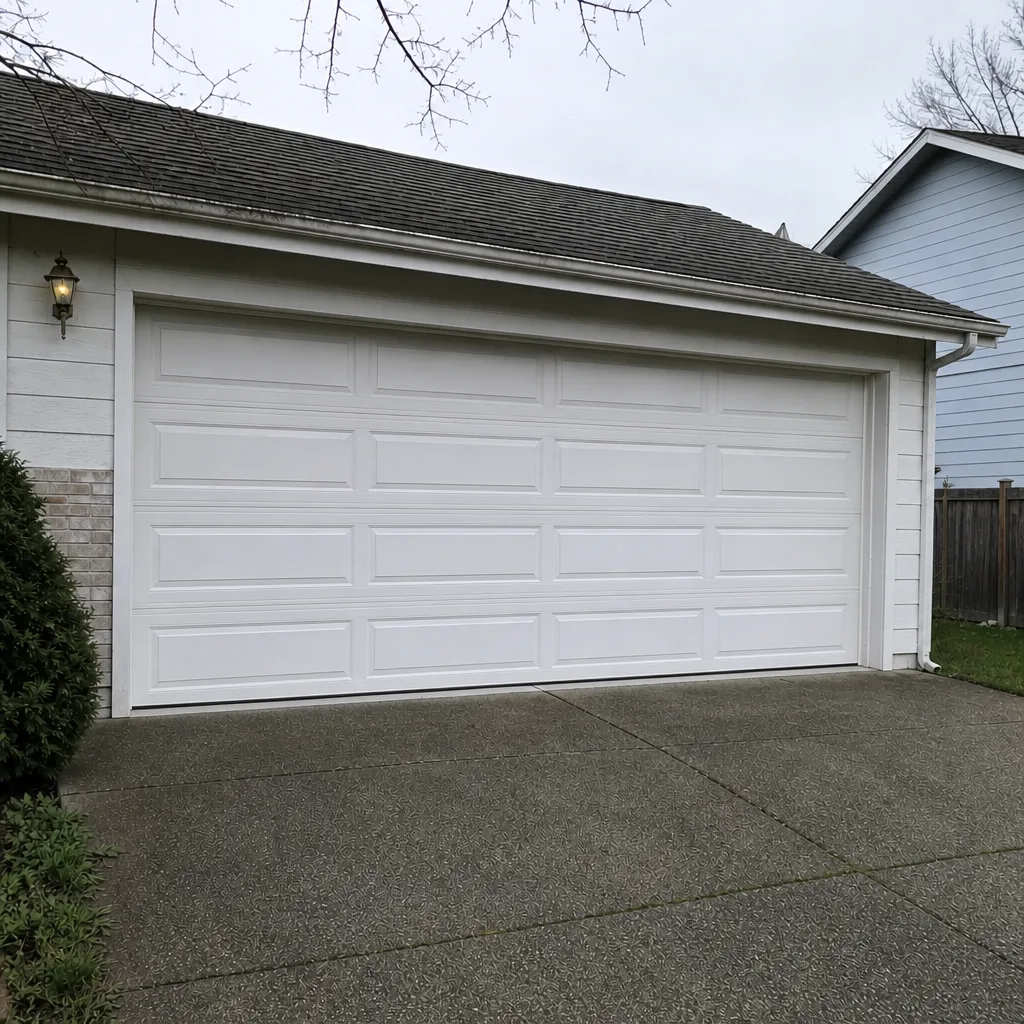 After
When to Call a Professional
Call a professional when the item is spring-related, cable-related, electrical, or involves a door that’s off track or physically damaged. Call sooner if the door won’t close fully, won’t reverse on contact, or if a cable shows any fraying. Those are the scenarios where waiting risks a bigger repair or a safety hazard. Our Tacoma garage door repair experts handle emergency calls for doors that have trapped a car or left a home unsecured, and emergency availability is a standing part of what we do. If your door fails during Tacoma’s wet season and you can’t safely leave the home, call and we’ll book the earliest available slot. Tacoma Garage Door Repair Experts offers free estimates in Tacoma – call (855) 658-4082. The written estimate sets the final price, and it’s quoted and agreed before any work starts.
Frequently Asked Questions
Once in fall (the priority session) and once in spring, with light monthly checks for hinges, rollers, and the safety reverse test. Fall matters more here because the November-through-March wet season is the hardest stretch. Do the high-consequence checks – bottom seal, spring lubrication, cable inspection – at every session.
Yes – applying a purpose-made lubricant along the coil is a homeowner-safe task as long as you don’t adjust, tighten, or attempt to release any tension. If you see rusted-through, cracked, or visibly deformed springs, stop and call a professional. Call (855) 658-4082 for an exact quote on any spring issue – estimates are free.
We quote maintenance and tune-up work by job, after we see the door. Pricing depends on condition, brand, and what needs adjusting. Call (855) 658-4082 for a free estimate – the price is quoted and agreed before any work starts, so there are no surprises when the invoice arrives.
Look for frayed strands, kinks, or a cable that’s come out of its drum. Do not touch a cable under tension. If you see any of these, treat it as urgent and call a professional. Frayed cables can fail with little warning, so a quick visual check each month is worth the minute it takes.
Often yes. Emergency service is a standing offering for door failures that trap a vehicle or leave a home unsecured. Call (855) 658-4082 and we’ll give you honest availability for a same-day slot when the situation is urgent. If a booking requires more lead time, we’ll tell you straight.
Yes. Our technicians work with all major brands, including LiftMaster, Chamberlain, Genie, Clopay, Amarr, Wayne Dalton, Craftsman, and Raynor – including mixed-brand setups like a Craftsman opener on a Wayne Dalton door. Bring us whatever system is in your garage and we’ll work with it. Call (855) 658-4082 to book.
The Bottom Line
Maintenance is about order, not volume. Rank your tasks by consequence: bottom seal, spring lubrication, cable inspection, then the balance and safety reverse tests, then the monthly routine. Time your real prep to fall, ahead of Tacoma’s November-through-March wet season, and treat spring as a lighter inspection pass. Use a cold-rated garage door lubricant rather than a national dry-climate product that gums up here. And know the line: springs, cables, wiring, and anything off-track are professional work, and touching them yourself voids most warranties. Every item in this guide is meant to catch a small problem before it becomes a larger one. When the checklist points you toward a professional, that’s the checklist doing its job.
For a free estimate on maintenance, repair, or a replacement, call Tacoma Garage Door Repair Experts at (855) 658-4082. Our technicians have up to 9 years of experience, we work with every major brand, and we’ll tell you plainly whether your door needs a tune-up or a bigger fix.
Written by the team at Tacoma Garage Door Repair Experts.