Last updated November 23, 2026
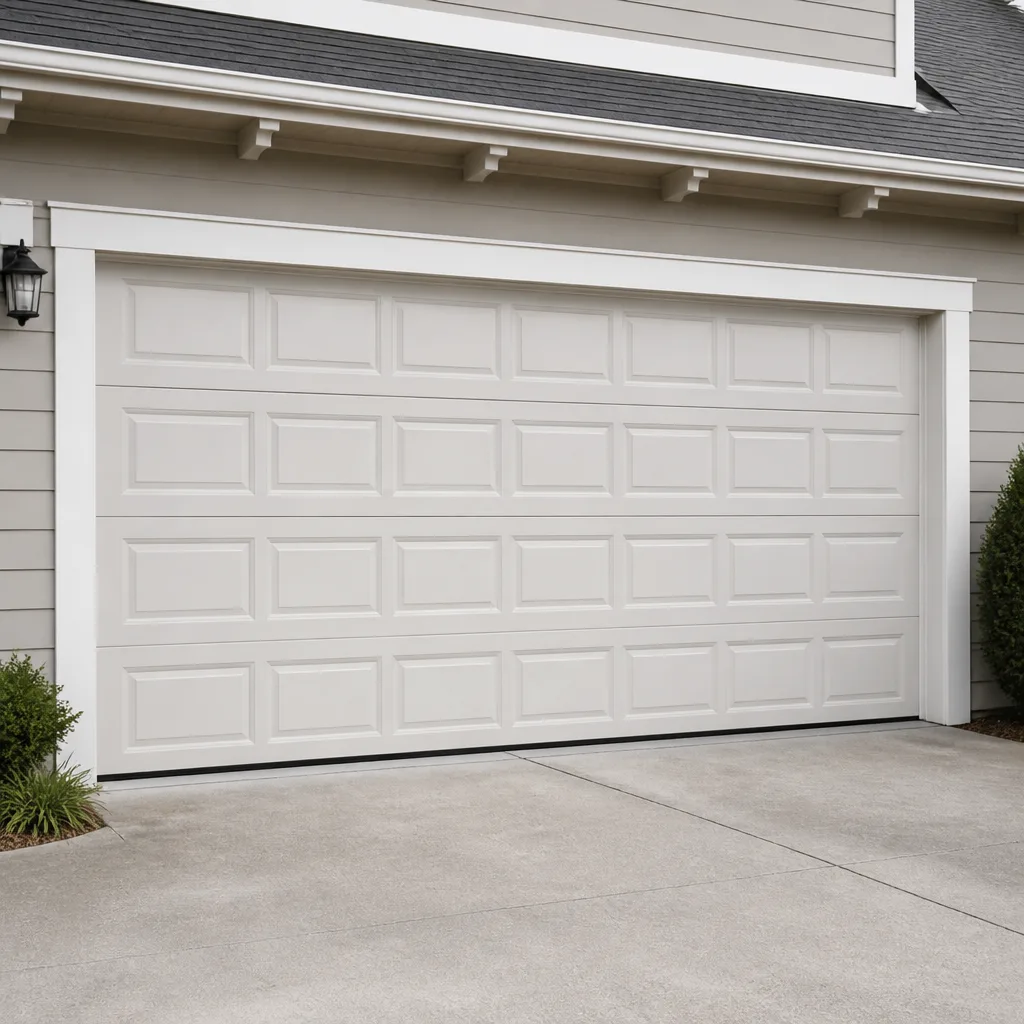 Raised-panel steel
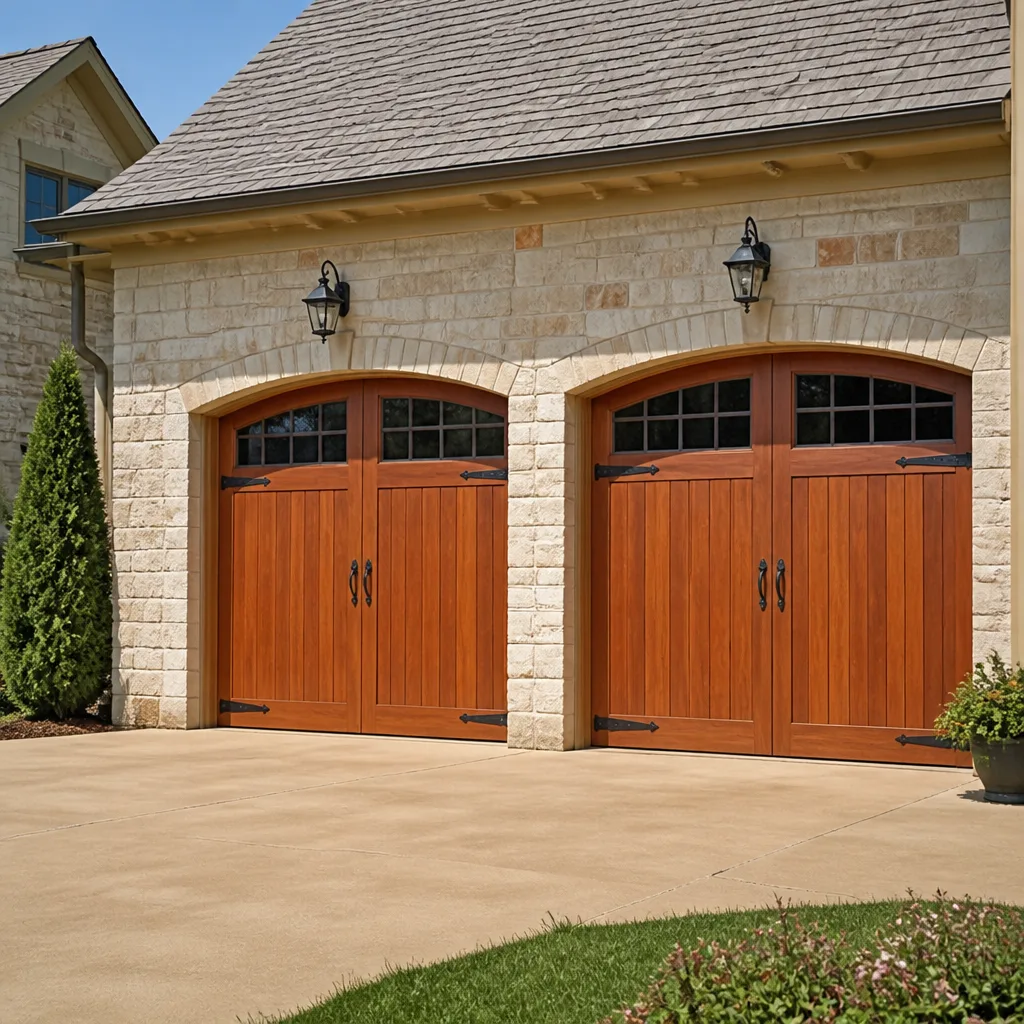 Carriage house
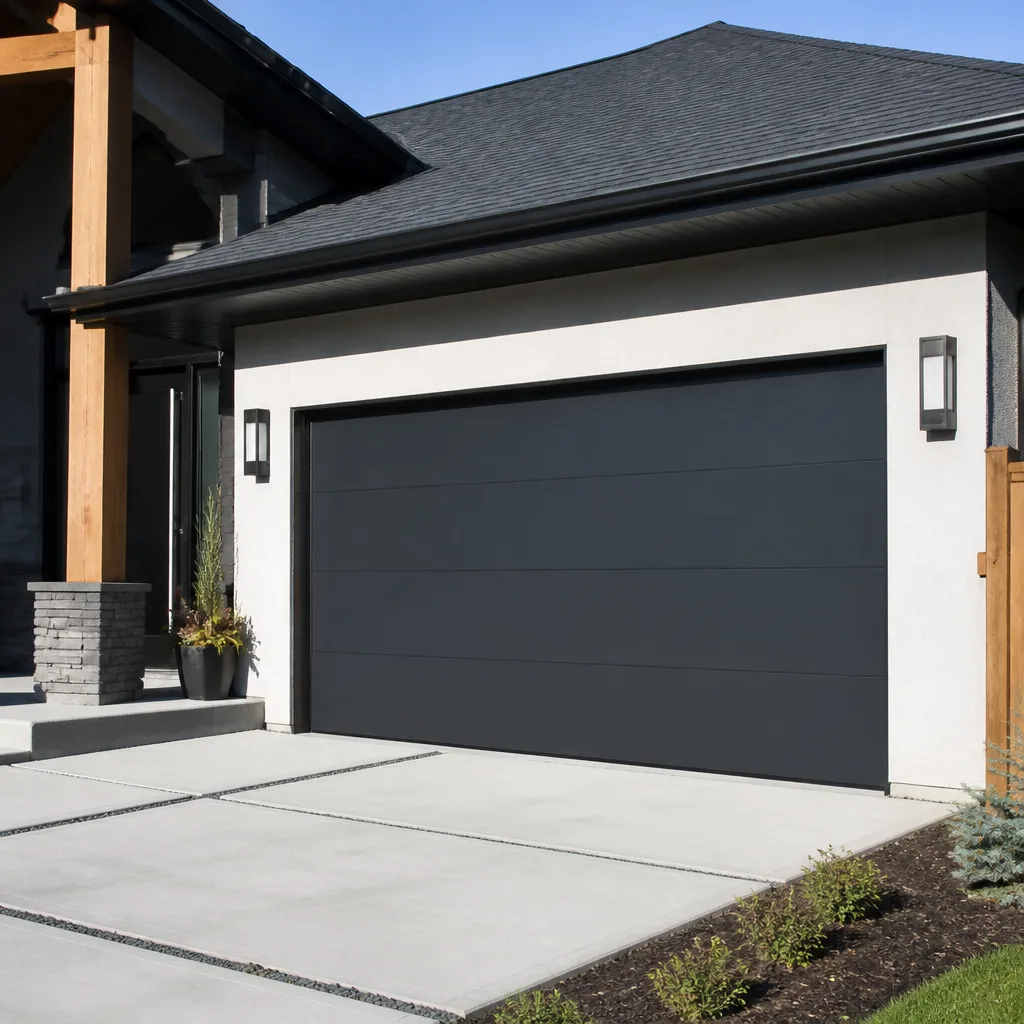 Modern flush
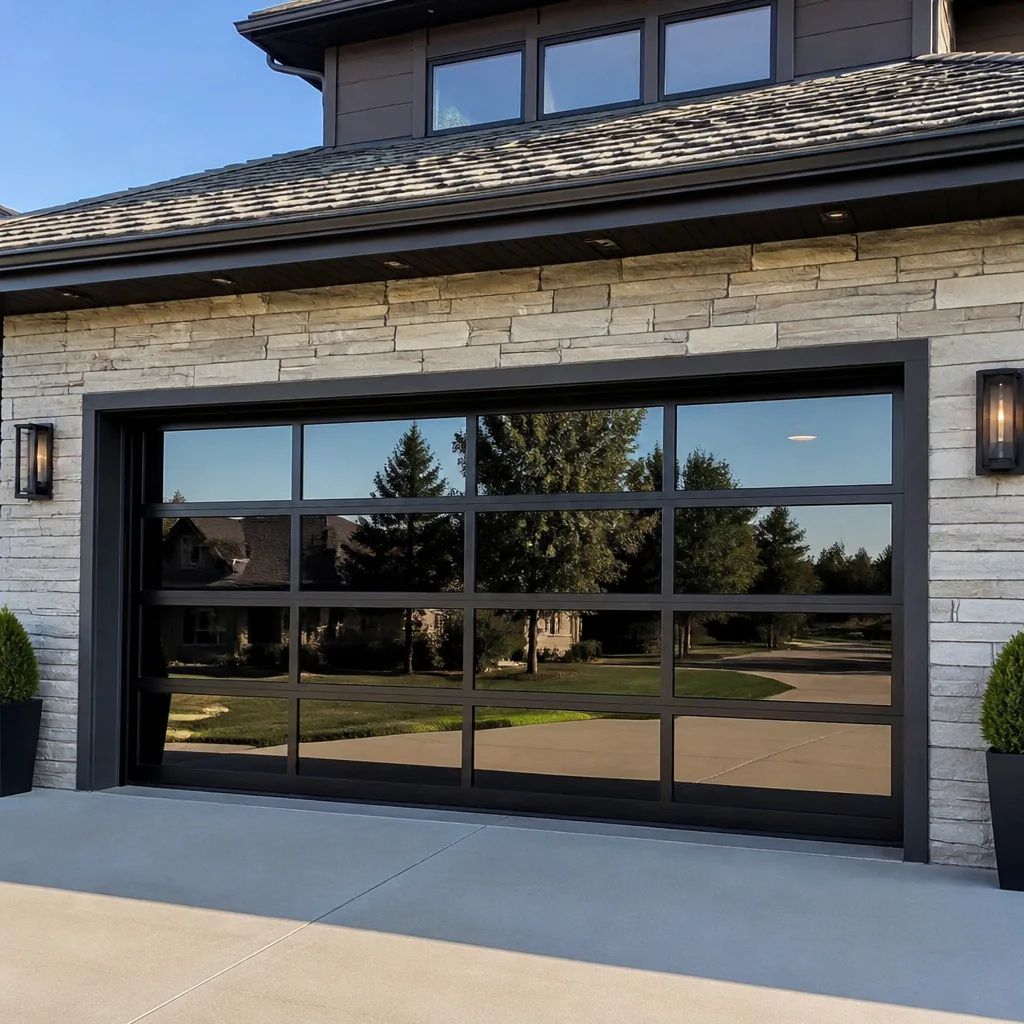 Full-view glass
 LiftMaster openers
 Chamberlain openers
Full 25-point door and opener safety check with every visit - springs, cables, rollers, tracks, and your LiftMaster or Chamberlain opener included
You get a price before we start. It does not change when the pro arrives.
Get your free estimateGarage Door Warning Signs: A Tacoma Homeowner’s Reference Guide
A garage door that reverses before it reaches the ground isn’t necessarily broken. It might be doing exactly what it was built to do: sensing an obstruction and retreating. That single detail matters, because the most expensive repair decisions a homeowner makes usually start with misreading a warning sign. The door is telling you something specific. Grinding, popping, a slow lift, a seal that looks fine one month and rotten the next – each one points to a different component, and the component decides whether you’re looking at a minor adjustment or a spring replacement.
This guide is a reference, not a sales pitch. We’ll walk through which symptoms point to the door hardware, the opener, the track, or the structure above it, which signs mean stop now, and which give you room to schedule service on your terms. Tacoma homes deal with a few things that Sun Belt guides never mention, and we’ll cover those too.
Quick Answer
Warning signs fall into two tiers: stop-using-the-door signs (snapped springs, frayed cables, a door that drops fast or sits crooked) and grace-period signs (noise, slow operation, bottom seal rot, rust streaks). The stop signs point to components that can fail violently and shouldn’t be tested; grace-period signs usually let you plan a repair, but they tend to get more expensive the longer they’re ignored. When in doubt, shut the door and have it looked at rather than diagnosing it with your hands.
Styles & brands we work with
- Raised-panel steel
- Carriage house
- Modern flush
- Full-view glass
- LiftMaster openers
- Chamberlain openers
Table of Contents
- Symptom-to-Cause: What Each Sound and Behavior Means
- Pacific Northwest Warning Signs Other Guides Miss
- A Slow Door vs. a Struggling Door
- Signs That Mean Stop Using the Door Immediately
- Signs That Give You a Grace Period
- Four Systems That All Feel the Same From Inside the House
- Opener Signals: What the Motor Is Telling You
- A Walking Inspection You Can Do Safely
Symptom-to-Cause: What Each Sound and Behavior Means
Noise is the most reliable diagnostic clue a garage door gives you, and it’s also the most ignored. A door that sounds different than it did last month is telling you which component has changed. Here’s how we map the common sounds to the parts that produce them.
- Grinding – usually a roller seized in its bracket, or a metal roller running dry on a worn track. Grinding often shows up first on a door that’s been sitting through a wet Tacoma winter without lubrication.
- Popping or a bang on one side – a torsion spring winding or an extension spring that’s loading unevenly. A single loud pop followed by a door you can barely lift is the classic snapped-torsion-spring signature.
- Squealing – a dry torsion spring, a dry opener rail, or a bearing plate that’s lost its grease. Squealing is a maintenance sound, not a failure sound, but it will wear the spring faster if left alone.
- Rattling – loose hinges, a loose opener chain or belt, or a bracket that’s backing out of the jamb. Rattling is the one sound you can often trace by standing still and listening for where it peaks as the door moves.
- Clicking without motion – the opener is engaging but the door isn’t releasing from its lock or the manual slide lock is still engaged. Check the lock before assuming the opener is dead.
Two more bearings worth knowing: a door that shudders as it rises usually has a bent track or a top roller pulling out, and a door that hums but won’t move has a stripped gear or a failed capacitor inside the opener. Both are common on the Cascade-foothill side of Tacoma, where doors sit in more temperature swing than they do near the water.
Pacific Northwest Warning Signs Other Guides Miss
Most garage door warning-sign articles are written for dry climates. In Tacoma, the door faces months of moisture, cool mornings, and relatively mild but persistent rain, and the signs show up in different places as a result.
- Rust streaking on the cables. Lift cables on a Tacoma door should look like clean steel. Brown staining or a fuzzy orange texture means the cable is corroding from the inside out, and that’s a scheduled-repair sign, not a wait-and-see sign.
- Bottom seal rot. The rubber or vinyl seal under the door is the first thing to break down in damp conditions. A cracked, compressed, or crumbling seal lets water creep under the door and against the slab, and it’s one of the easiest things to inspect from the driveway.
- Hinge discoloration. Condensation collects on metal hinges and shows up as white or chalky buildup before it turns to rust. If you run a finger along a hinge and it comes away chalky, the hinge is drying out and will start to seize.
- Paint blistering on the bottom panel. Steel doors with a moisture-laden bottom edge blister from underneath, and the rust can travel up panels if it isn’t caught. A visual check of the bottom two feet of the door after a wet stretch is worth the minute.
- Warped wood or loose panels. Tacoma has plenty of older wood and wood-composite doors. When the frames swell, panels bow and the door stops sitting flush against the opening.
None of these signs require an emergency call by themselves, but together they tell you a door hasn’t been maintained through a wet cycle. That’s when the small stuff turns into the expensive stuff. When a door has mixed-brand hardware – say a Craftsman opener driving a Wayne Dalton door – the tech has to know which part is actually failing before swapping anything.
A Slow Door vs. a Struggling Door
A door that lifts and lowers slowly is often fine. A door that lifts and lowers slowly and struggles is not. The distinction is whether the door is running at a slower speed or fighting to move at any speed.
Here’s the practical test, done by eye from outside the door:
- Listen to the opener. If the motor sounds smooth and steady, the opener is likely doing its job and the speed setting is just what it is.
- Watch the door panel. If it starts moving smoothly and then slows or stutters halfway, the spring tension has changed.
- Check the gap across the top. A door that struggles will often lag on one side, and you can see that as a wider gap on the left or right top corner.
- Feel for heat at the opener head. A motor that’s working much harder than it should gets warm, and that’s a sign it’s compensating for binding or tension problems.
- Listen for the opener cycling twice. An opener that reverses and retries during one lift is seeing resistance the door shouldn’t have.
Why the distinction matters: slow-but-smooth usually points to the opener’s force or speed setting, or simply to a heavier door running on a lighter-rated motor. Slow-and-struggling almost always points to spring tension, a binding track, or a roller failing under load. Those are different fixes with different price ranges, and misreading one for the other is exactly how a homeowner ends up paying for a new opener when the springs were the real problem. A Tacoma tech reading the sign correctly saves money in either direction.
Signs That Mean Stop Using the Door Immediately
Some warning signs aren’t warnings. They’re instructions. If you see any of the following, stop operating the door and call for service before you touch the wall button again.
- A snapped torsion spring – the door will be impossible to lift by hand, and forcing the opener to try can burn out the motor or cause the door to drop.
- A snapped or badly stretched extension spring – usually visible as a gap or a dangling hook, and a serious risk if it fails while you’re near it.
- A frayed or kinked lift cable – cables are under extreme tension and can whip if they snap. Do not cut, bend, or tug a cable.
- A door that slams down or drops fast on the last foot – the safety reverse may be failing, and that’s the one function that protects anyone under the door.
- A door that hangs crooked or off-track – it can pull the whole track down, and a bent track is a much bigger repair than a realigned one.
- A door that closes and the opener keeps pushing – a failing limit switch or a broken photo-eye. This is the case for an urgent call.
Springs and cables are the part of a garage door where DIY is genuinely dangerous. Torsion springs hold enough stored force to injure a person badly, and there’s no safe way to test one by hand. We repair springs as a core service precisely because this isn’t a job for a general handyman.
Signs That Give You a Grace Period
Plenty of warning signs are real but patient. You can schedule garage door repair on a normal day instead of a weekend emergency, and spare yourself the emergency-rate conversation.
- Occasional squealing or squeaking during a cycle.
- A door that’s a little noisier than it used to be on one panel.
- A bottom seal that’s starting to crack but still touches the slab.
- Chalky hinge buildup that hasn’t turned rusty yet.
- A slow opener that otherwise works every time.
- A single remote that’s gotten stubborn while the wall button works fine.
Each of these is worth a scheduled visit. None of them justify waking up the neighborhood. If you’re not sure which category a sign belongs in, that’s when a call is worth making. Explaining a sound or a behavior out loud to a technician on the phone usually settles it in a minute or two.
Four Systems That All Feel the Same From Inside the House
From the driver’s seat, a stuck door is a stuck door. From a diagnostics standpoint, it’s one of four very different problems, and each one gets solved differently.
- The door hardware. Rollers, hinges, cables, springs, and the bottom seal. Symptoms show up as noise, resistance, or visible wear. Hardware problems are usually the place to look first if the opener sounds normal.
- The opener. The motor, control board, capacitor, limit switches, or safety sensors. Symptoms show up as humming without motion, reversing mid-travel, or a remote that only works up close. Opener issues can be brand-specific, which is why garage door opener repair is its own specialty.
- The track system. The vertical and horizontal rails that guide the door. Symptoms show up as a shudder, a door that binds in one spot, or a roller that jumps the track. Track problems are often a consequence of a hardware problem that went unaddressed.
- The structure above the door. The header, jamb, and the framing the door hangs from. Symptoms show up as a door that won’t sit flush, tracks that have shifted, or a whole door that’s begun to sag. This is the least common and the most involved, because the door itself isn’t the source of the problem.
We’ve seen this misread enough that it’s become a habit: check the structure first, then the track, then the hardware, then the opener, in that order, when the symptom is “the door won’t shut properly.” That sequence catches the cheap fixes before the expensive ones, and it’s the way a technician who works only on garage doors is trained to look at a Tacoma door.
Opener Signals: What the Motor Is Telling You
Openers give their own set of signals, and they’re worth learning because they tell you whether the problem is the motor or the door. A few common ones, with what they usually mean:
- One flash, then nothing. Usually a sensor or safety issue, not a dead motor. Check that the photo-eyes are aligned and clear of cobwebs.
- Clicking but no movement. Often a stripped gear or a failed capacitor. On Chamberlain and LiftMaster myQ-compatible openers this is a common failure point on older units, and it’s a repair, not a replacement.
- Reversing before the floor. Could be a sensor, a floor that isn’t level, or the force setting. Don’t assume the door is broken.
- Remote works up close, not from the driveway. A battery, antenna, or interference issue. The opener itself is fine.
- Won’t open from one remote but opens from another. A remote-specific pairing problem. Raynor and LiftMaster systems handle this differently, and the fix is usually pairing.
Brand fluency matters here. Whether your door runs on a Genie, a LiftMaster, or an older system, the behavior clues are decoding as part of the brand’s design, not against it. If it turns out the opener is beyond repair, the same company can talk through garage door installation for a replacement without sending you to a second provider.
A Walking Inspection You Can Do Safely
You can do a lot of useful inspection without touching a spring or a cable. Here’s a walkthrough we’d suggest to any Tacoma homeowner once a season.
- Stand back and look at the door straight on. A door that’s noticeably unlevel is a hardware or track sign.
- Run your eyes along the bottom seal. Cracks, gaps, or crumbling rubber are easy to spot from outside.
- Look at the two cables on either side. Clean steel is good. Rust streaks are a call.
- Look at the hinges and rollers. Chalky or rusty hinges mean maintenance.
- Listen to a full open-and-close cycle from the driveway. Note any new sounds.
- Test the safety reverse by placing a roll of paper towels in the door’s path with the door closing and watching it retreat. Don’t use anything you care about, and don’t test by hand.
- If your door is a newer smart opener, check the app for force-error or obstruction logs.
If any of the stop-now signs from earlier in this guide show up during the walk, stop there and call. Everything else can wait for a scheduled visit.
Common Mistakes to Avoid
- Assuming the opener is the problem. A huge share of “my opener is dead” calls turn out to be a door with a broken spring or a bent track that the motor can’t move anymore. Check the door hardware first.
- Testing a spring by hand. Torsion springs are under load even when the door is down. If you’re not sure whether it’s a spring, leave it to a technician.
- Ignoring the bottom seal through a wet Tacoma winter. A rotted seal is a $30 part that, left alone, lets moisture under the door and into the slab. Small, cheap, and easy to defer until it’s not.
- Forcing a crooked door up or down. A door that’s off-track can bend the rail and turn a realignment into a full track replacement.
- Greasing everything in sight. Grease on the wrong parts, like a nylon roller or a travel limit, causes problems rather than fixing them. When in doubt, ask what should be lubricated and what shouldn’t.
- Calling a general handyman for a spring. Spring work is a specialist job. A general repair person can do a lot of things, but tensioned spring repair is where experience shows.
- Not mentioning the brand when you call. Brand matters for parts and diagnostics, and mentioning your Wayne Dalton or Craftsman system when you call saves a trip and shortens the visit.
See the difference
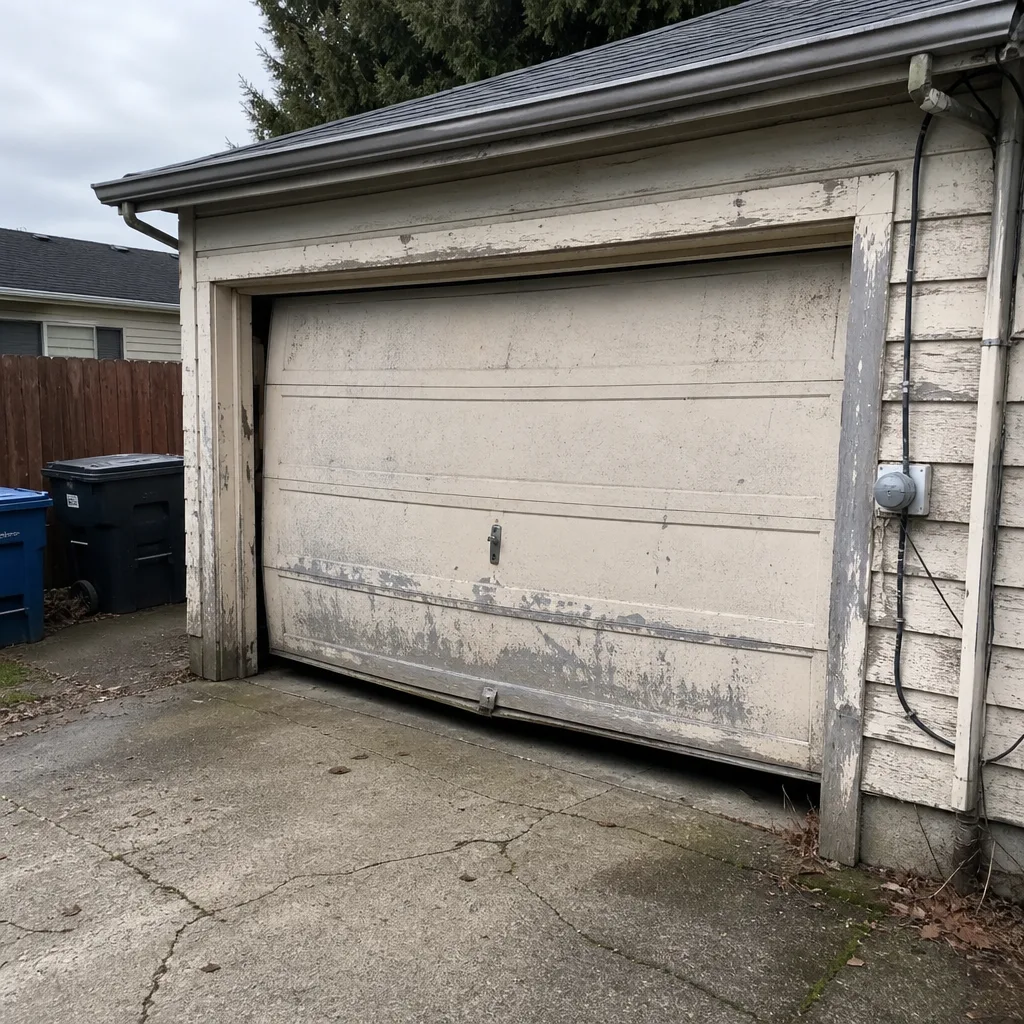 Before
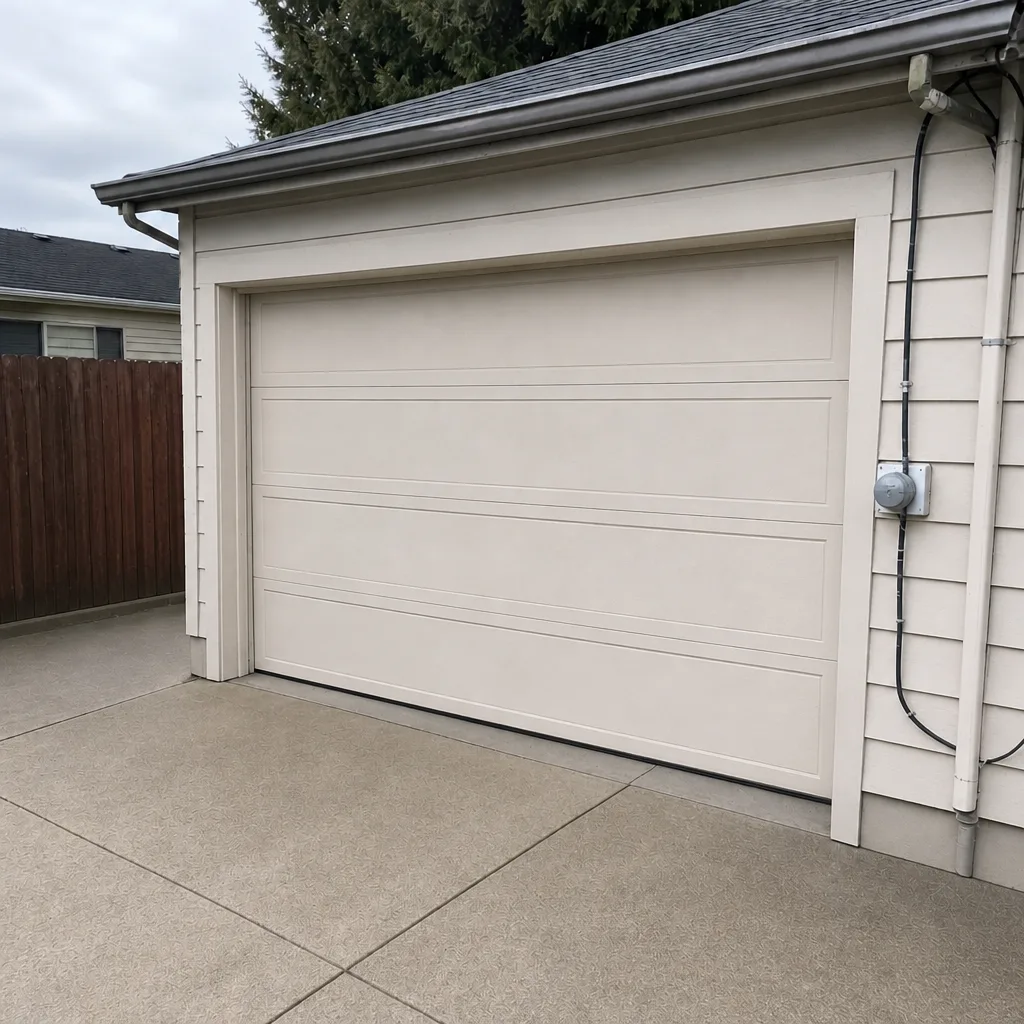 After
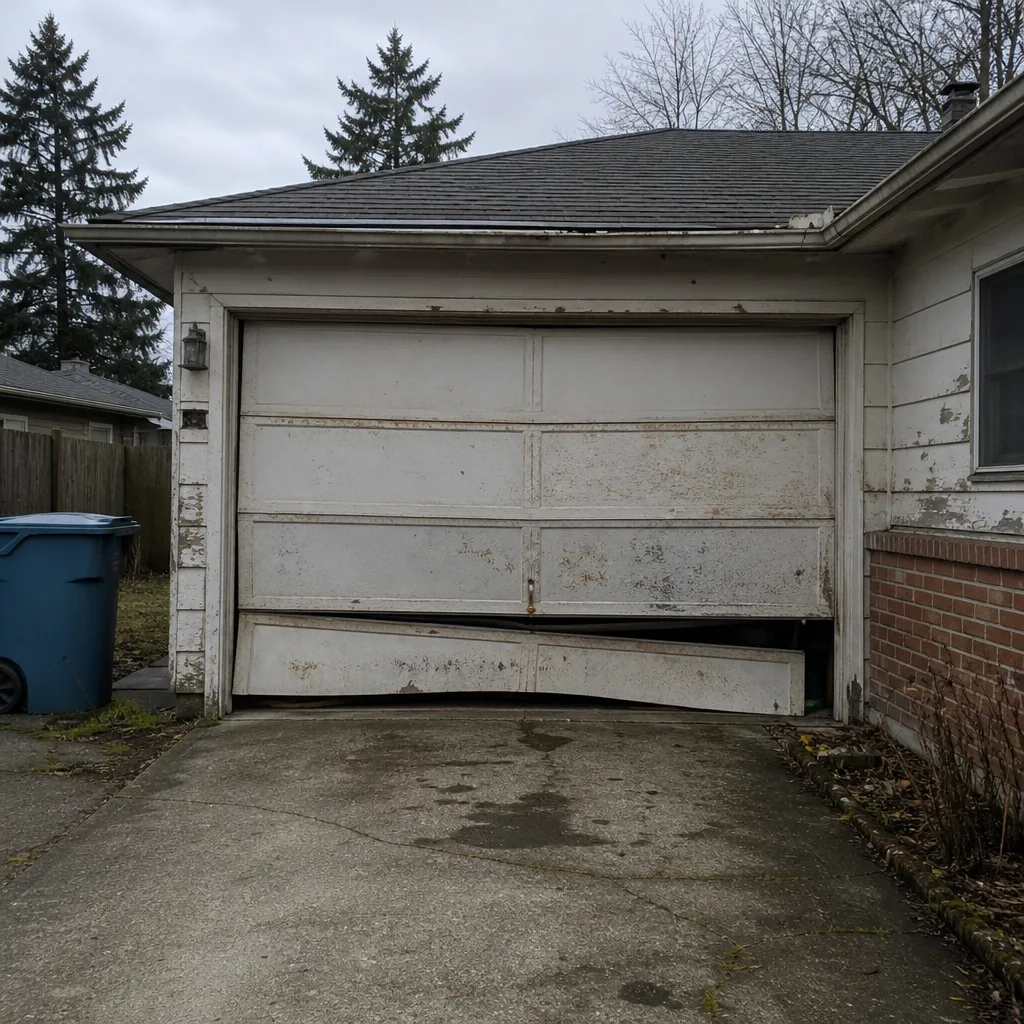 Before
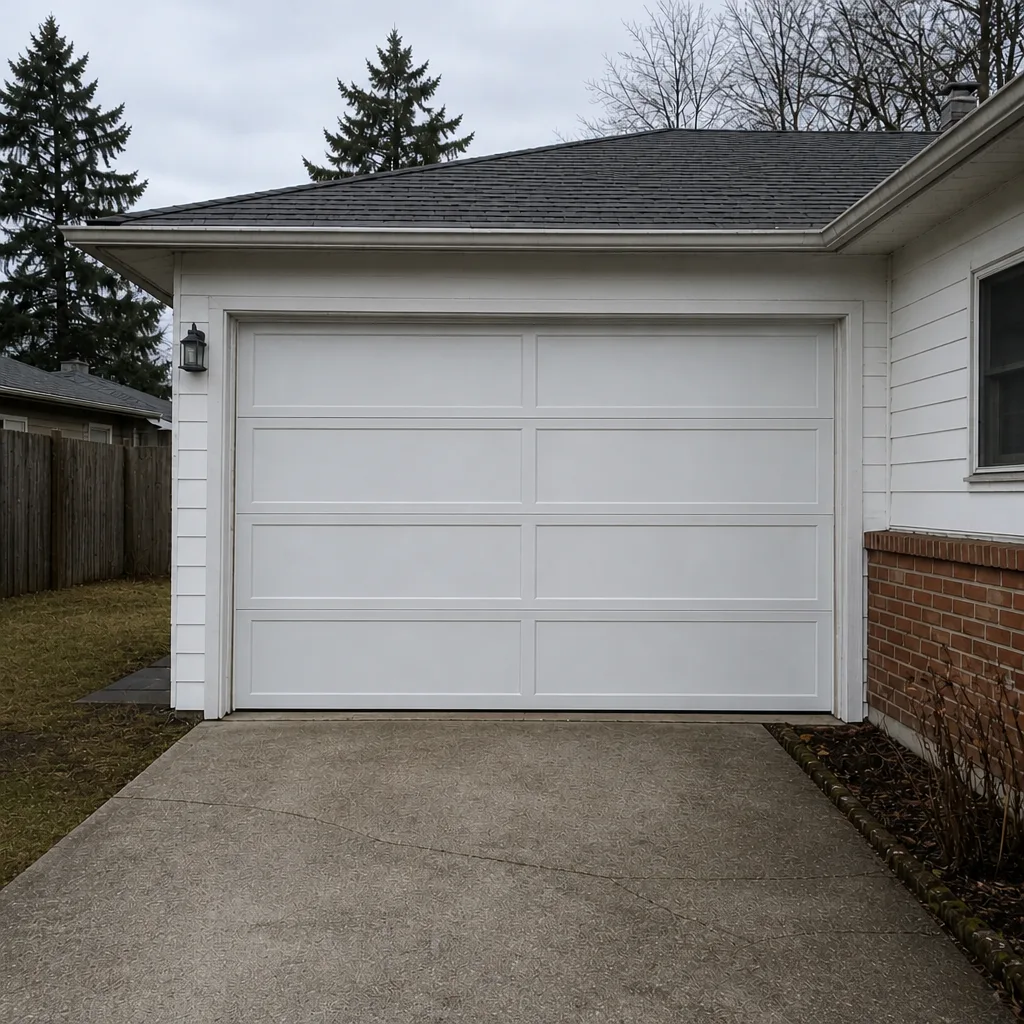 After
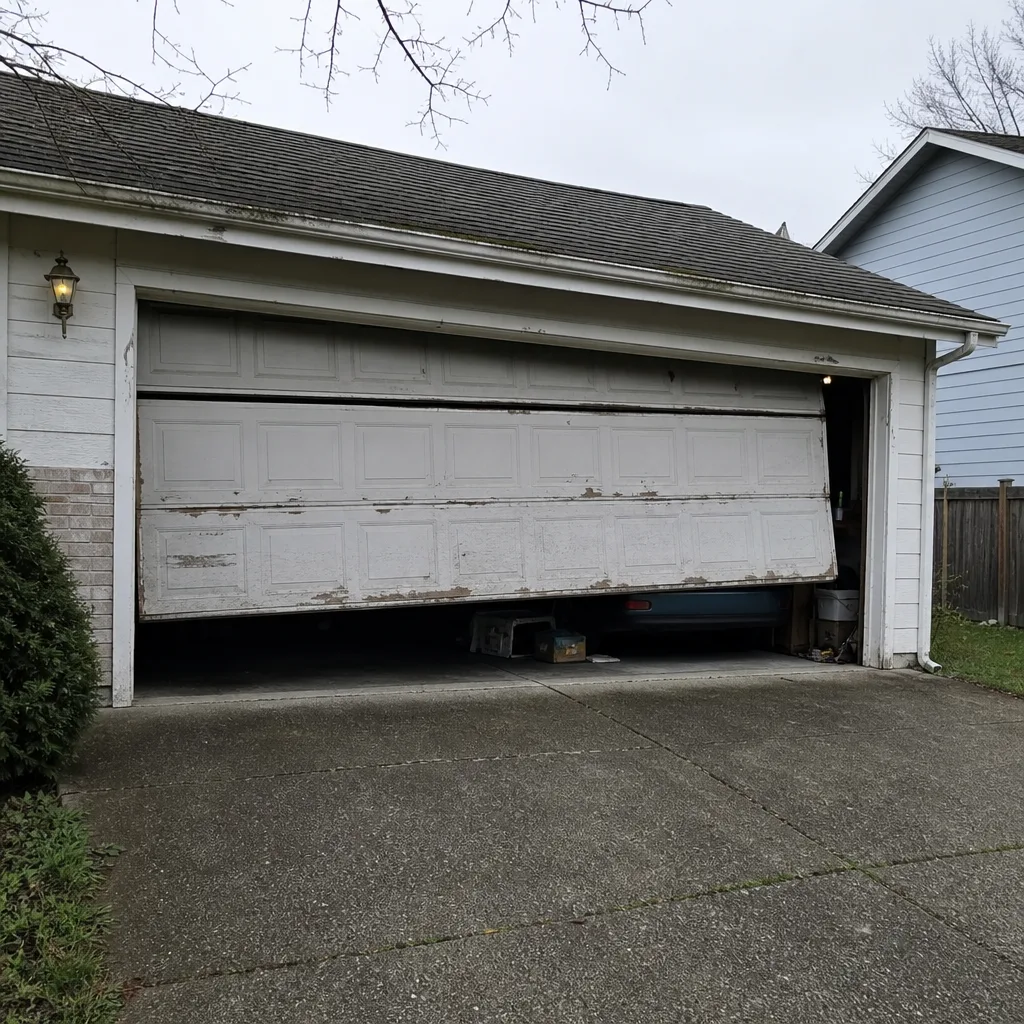 Before
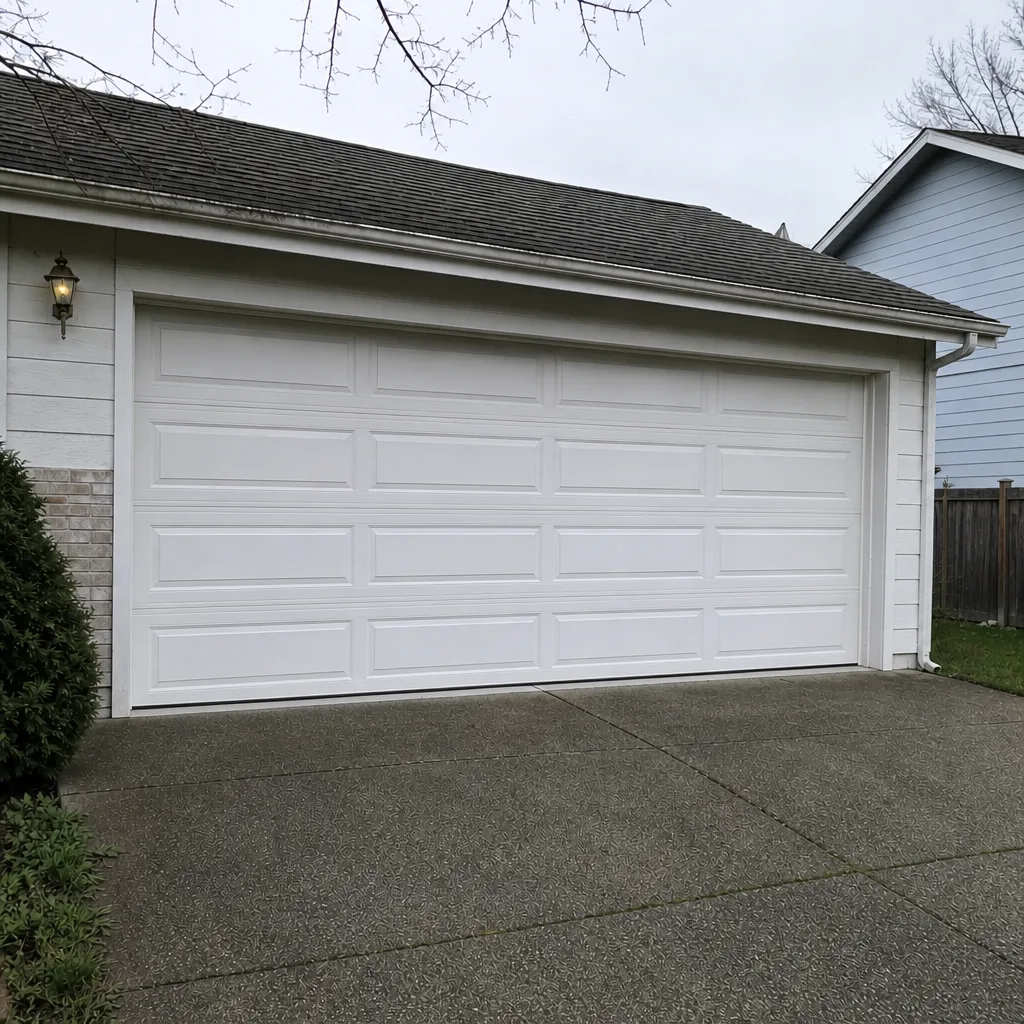 After
When to Call a Professional
Call a professional if the door is off-track, the springs are damaged or just not lifting the door, the cables are frayed or kinked, the door drops on the last foot, the opener hums without moving, or a safety reverse test fails. Call if the door won’t shut fully and won’t lock, since a slightly open door is a security problem. Call if you’re not sure. The Tacoma Garage Door Repair Experts line exists for exactly the moments when a homeowner shouldn’t try to solve it alone, and our technicians have up to 9 years of experience reading the same signs in Tacoma houses that you’re reading in this guide. Tacoma Garage Door Repair Experts offers free estimates in Tacoma – call (855) 658-4082. There’s no obligation to book anything, and getting a straight answer on the phone is often enough.
Frequently Asked Questions
Not usually. A door that reverses before the floor is often doing its job – sensing an obstruction, a misaligned photo-eye, or a floor that isn’t quite level. Check that the sensors are clear of debris and facing each other; if the door still reverses, it’s a tuning issue rather than a failure. Either way, don’t force it closed by hand. Call (855) 658-4082 if you’d like a technician to look at it, and estimates are free.
Worn or rusting lift cables and a deteriorating bottom seal, in our experience. Tacoma’s wet stretches are easier on the door than an ice climate, but the moisture that hangs around for weeks at a time works on the cables and the rubber seal faster than most homeowners realize. Both are cheap to fix early and not cheap to fix late.
A snapped torsion or extension spring, a frayed or kinked cable, a door that hangs crooked or off-track, a door that drops fast on the last foot, or an opener that keeps pushing after the door closes. Any of these means stop operating the door and call for service. Do not try to lift the door by hand or attempt spring repair yourself.
Sometimes. A squeak from a dry hinge or a roller can often be solved with the right lubricant in the right place, and loose hinge screws are a wrench-and-a-minute job. If the noise is grinding, popping, or coming from the springs, stop and call – those are signs of components that can fail dangerously and shouldn’t be worked on by a homeowner.
Sometimes, yes. A Raynor or Wayne Dalton door can have hardware that reads slightly differently than a Clopay, and an older Craftsman opener has different failure patterns than a newer LiftMaster myQ-compatible unit. Mentioning your brand when you call helps the technician arrive prepared to diagnose, not just listen. That’s what we mean by your brand, our expertise.
Often, yes. Emergency garage door service is a standing offering, not a special case, and we keep it available for time-sensitive failures like trapped cars and doors that can’t be secured. For a non-urgent sign – a slow door, a noisy cycle, a tired seal – a scheduled visit is the better call, and the price will be easier on you. Call (855) 658-4082 to talk through what you’re seeing.
The Bottom Line
Warning signs are clues, not verdicts. A reversing door might be a sensor working perfectly. A slow door might be a setting; a struggling door almost never is. The stop-now signs – snapped springs, frayed cables, off-track doors – deserve an immediate call and no DIY attempt. The grace-period signs – noise, seal wear, hinge discoloration – deserve a scheduled visit before they compound. Read the sign in the right system, and the repair is proportionate to the problem.
If you’d rather talk it through with someone who reads Tacoma garage doors for a living, call (855) 658-4082 for a free estimate. Garage doors are all we do, and we’re glad to point you in the right direction.
Written by the team at Tacoma Garage Door Repair Experts.